

The gift that keeps on giving
It was just an ordinary evening in early June. I stood at my kitchen sink, washing dishes and looking out the window at vast fields bordered by conifer-clad hills, as the day quieted around me. I’ve always had a particular fondness for that tranquil period between day’s end and twilight, when the world seems to take a pause and the lowering sun casts a golden light over the landscape.
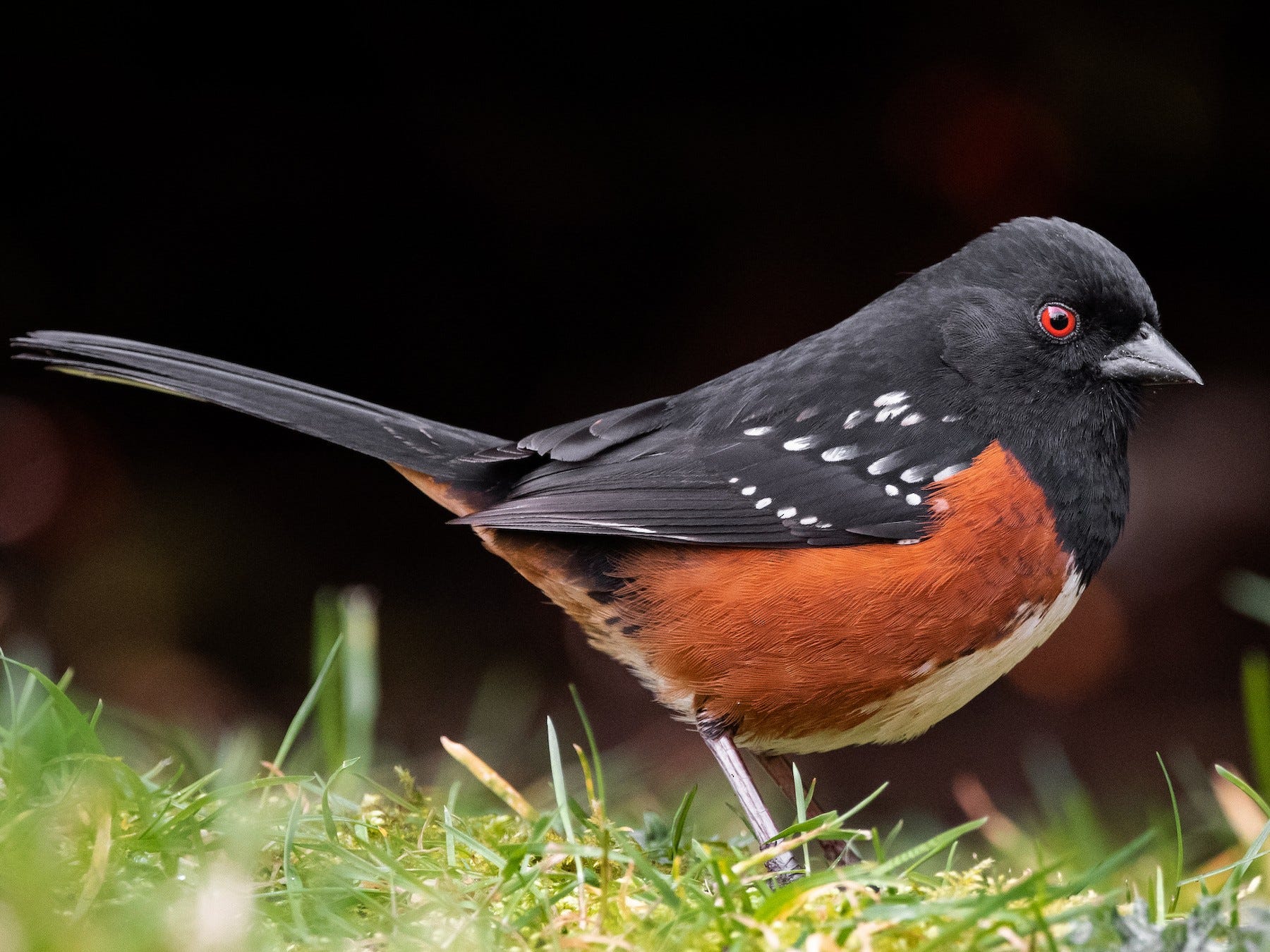
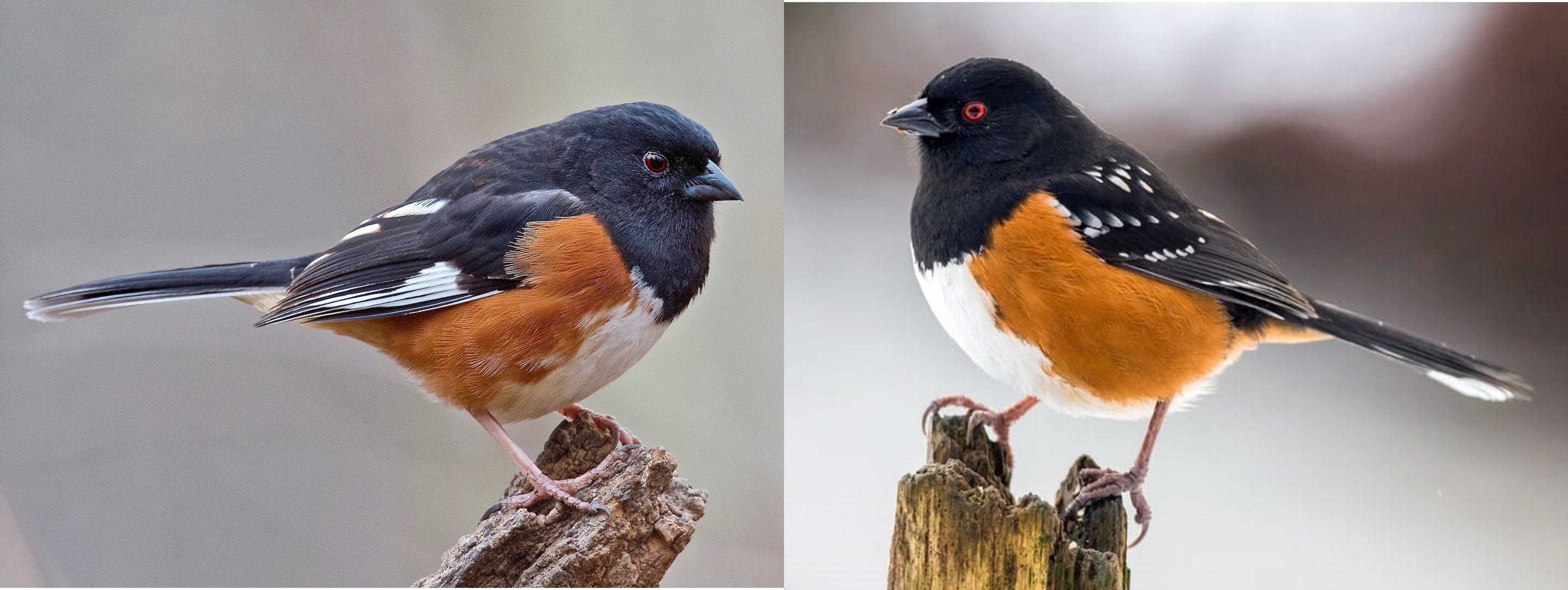
A flash of black and white at my bird bath had me reaching for the binoculars that reside on my kitchen counter to confirm what my subconscious had already identified. A Spotted Towhee was dipping his bill into the water prior to wading in. Striking members of the sparrow family (which is dominated by so-called “little brown jobs” for their look-alike variations of brown-and-white plumage), towhees are secretive birds. Lurking in the tangled undergrowth of brushy fields and forest edges, this elegant songster is more often heard than seen. Though I rarely glimpsed my local towhee pair, I was greeted each spring morning by the male’s characteristic buzzy trill, as the bird proclaimed its ownership of my neighbor’s shrubby hillside.
So it was a treat to see the male lower himself repeatedly into the bath and splash water over his back with his wings. Each time he stood, I relished seeing his striking rufous sides and his gleaming red eye. While he bathed, his mate foraged below my bird feeder and around the base of the bath, showing off the towhee’s characteristic two-footed, backward-scratching hop. With each hop and scratch, the female uncovered leftover seeds or hidden insects in the litter that covered the ground under a cluster of ponderosa pines. I stood, captivated, watching the distinctive pair—the female a browner, more subdued version of the dapper male—go about their evening activities. Here were birds foregoing their hidden habits as they bathed and foraged in full view, illuminated by the mellow evening light.
Inexplicably, the image of that peaceful scene stayed with me as summer days lengthened and warmed. I’ve always loved seeing wildlife go about its daily life, uninfluenced by my presence. Maybe it was seeing a bird that is so often hidden behave in such an open and relaxed way. Maybe it was knowing that, despite all the struggles faced by the natural world, these birds were taking advantage—for just a moment—of something positive that I’d been able to provide for them. Maybe it was the reminder that untold numbers of animals are living their lives—foraging, raising young, migrating to distant lands—around us all the time, despite all the obstacles we put in their paths.
I had provided a safe space and available water in a dry landscape, but ultimately these two towhees gave me infinitely more: an image of tranquility—of a world separate from mine—that would come to mind periodically, giving me a moment of peace and a gift of nature’s gold whenever it did so.
Take a small step to help birds
Birds are in crisis and need our help more than ever. According to the US Fish and Wildlife Service, over 96 million people in North America watch birds. If each of us does something (anything!) to help them, we may be able to reverse declining bird numbers.
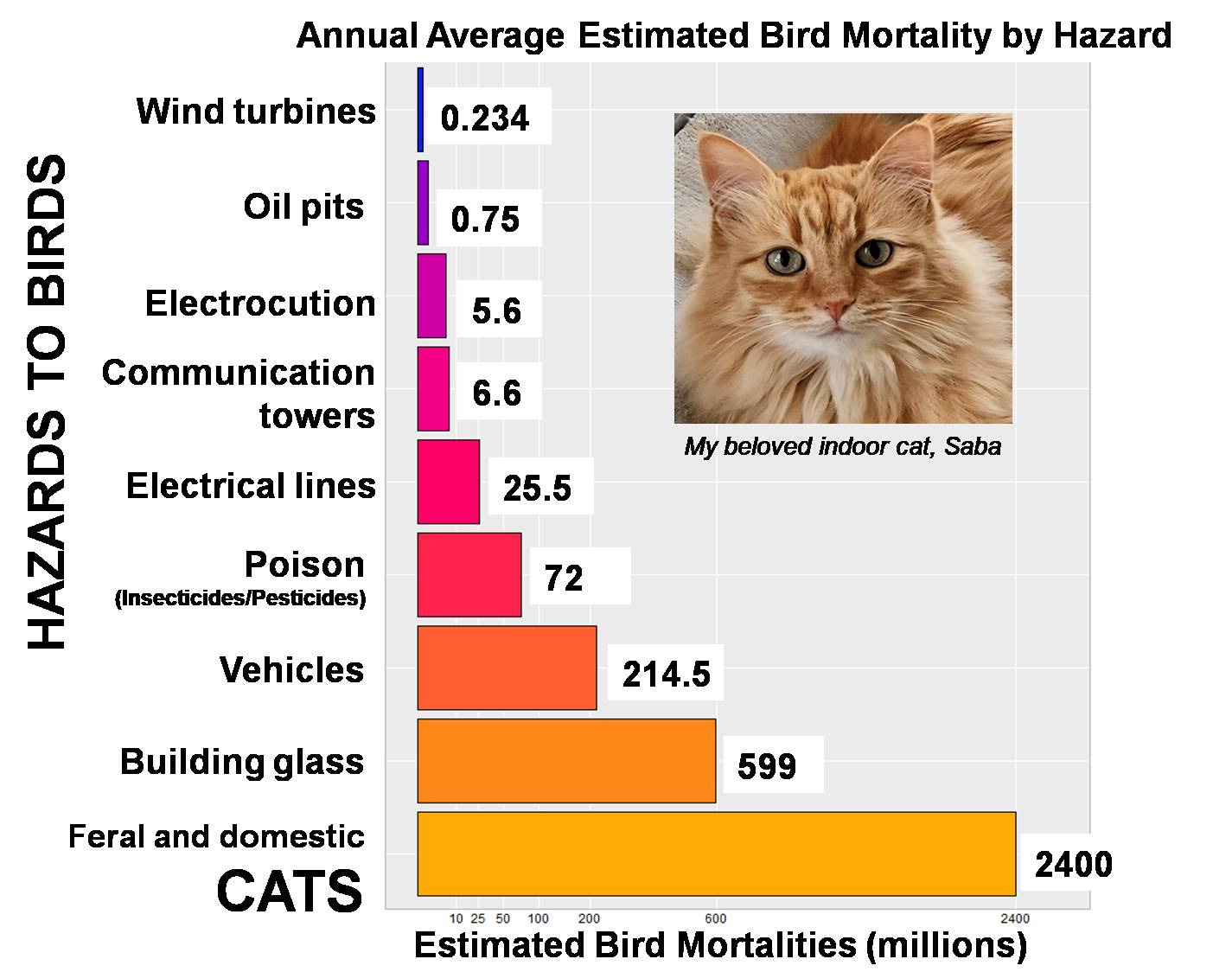
Towhees, like so many birds, nest on (or near) the ground. When nesting females are disturbed by potential predators, they often scurry away through the undergrowth rather than taking flight, to avoid drawing attention to their nest. This strategy makes fleeing towhees particularly vulnerable to attacks by feral and domestic outdoor cats. Keeping your cat(s) indoors will give ground-nesting birds like towhees and meadowlarks a chance to successfully raise their young.
Build or buy a catio! Keep your cat safe and enrich its life by providing it with a contained outdoor space, so it can enjoy time outside without posing a threat to native wildlife.
Feeding feral cats attracts more feral cats and keeps these non-native animals on the landscape, where they pose a dire threat to our birdlife and kill billions of small mammals—a critical food source for owls, herons, kestrels, foxes, snakes, and other animals. It is kinder to take in strays and keep them indoors or take them to an animal shelter than it is to subsidize their presence outdoors.
If you have an opportunity, support local ordinances against Trap, Neuter, and Release programs. These well-meaning but harmful-to-wildlife programs strive to gradually reduce numbers of feral cats by trapping them, neutering them, then returning them to their capture site. But these programs are ineffective at reducing feral cat numbers, and feral cats kill staggering numbers of birds, whether or not they are neutered. Stand up for birds by opposing TNR programs.
Many people adopt or keep “barn cats” to “control” rodents on their properties. But these cats spread diseases and kill untold numbers of birds as well as rodents. In addition, they face far more threats and have dramatically shorter lifespans than do indoor cats. Use humane traps if you need to control rodents in stables or barns and leave the outdoor rodents for the many native predators that depend on them.
Until next time …
P.S. To learn about one of my more spectacular bird misidentifications (involving a Green-tailed Towhee), check out my new book Feather Trails—A Journey of Discovery Among Endangered Birds.
As always, a stellar post, Sophie! Love all towhees! (Mew!). And thank you for reminding us of the devastating wildlife/bird losses resulting from outdoor and feral cats. And for those of you who may think that Sophie just isn't a cat lover, read the brilliant and compassionate passage in her book Feather Trails (Hawaiian Crow section) to see her personal conflict and angst dealing with this difficult issue.
And Susie, I agree! I would rather have chickens fertilize my garden and eat insect pests than have cats use it for a litter box! 😉
They are handsome little birds!
I recently learned that the town near me has an ordinance banning any domestic animals EXCEPT CATS from roaming free. I’d rather have the neighbor’s chickens in my yard than their cats. At least that way I might get some free eggs instead of dead birds!