
Captivating corvids

Embracing the new
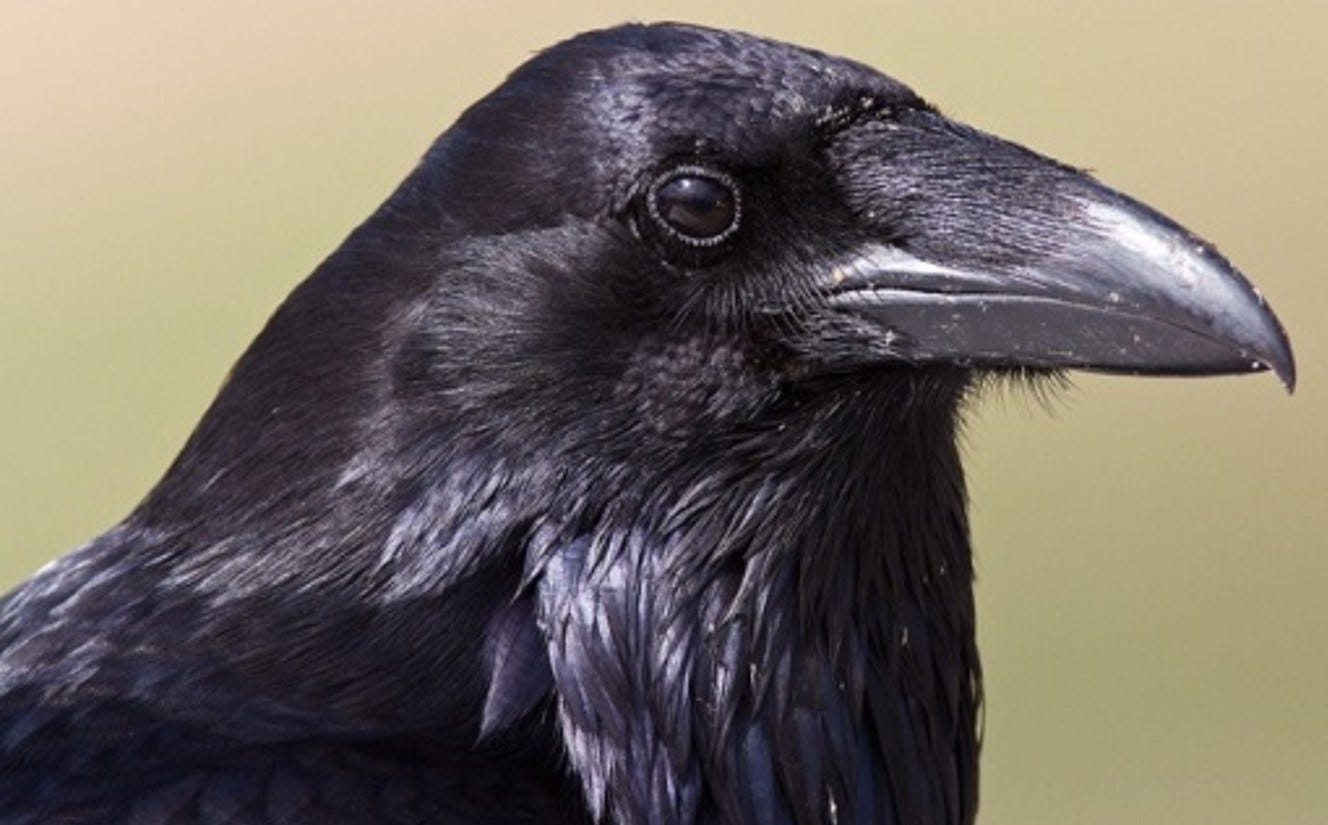
I hear them before I see them. A deep, guttural croark, croark. And then a second croaking voice followed by the cry of a Red-tailed Hawk. Two Common Ravens are pursuing one of my local red-tails, diving at it repeatedly so it will present its talons in defense and inadvertently release the prey it’s clutching in its feet. Despite the hawk’s fierce weaponry, the ravens’ tag-teaming harassment is likely to be successful, and the world’s largest songbird—the Common Raven—will have deployed its smarts and resourcefulness to win itself a meal.
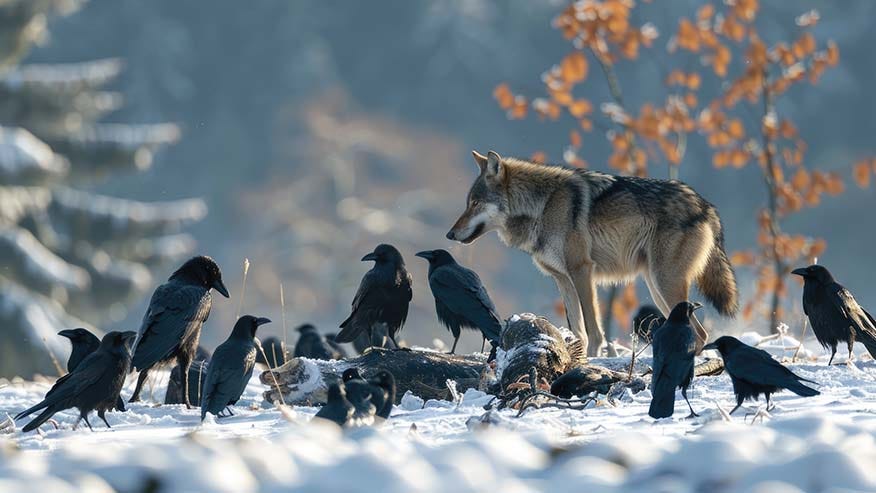
Brash, intelligent, and opportunistic, the Common Raven inhabits a wide variety of habitats throughout the northern hemisphere and the western US. Piracy (or kleptoparasitism—meaning one animal stealing from another) is just one of the many ways that this wily bird secures its food. Ravens are also well known for following hunting wolves and other predators, then availing themselves of the remains once an animal is killed. The birds may even alert wolves to potential prey. If the corvids find an intact carcass, they will call to attract more powerful scavengers to tear it open. In northeastern forests, juvenile ravens often yell to attract other young ravens to carcasses so that their subsequent aggregation can overwhelm the defenses of territorial adults. Ravens key into human hunters too, flying in to investigate potential food after hearing a gunshot. And they watch the breeding activities of other birds so they can avail themselves of eggs or nestlings. The bird’s eclectic diet includes carrion, human garbage, insects, berries, and small mammals and reptiles.
But despite their opportunism and serious food acquisition skills, ravens are better known for their legendary intelligence, problem solving abilities, and the possibility that they engage in certain activities for the sheer fun of them. While some “mischievous” raven doings, such as damaging roof shingles and delicate airplane wings, can be explained by the tendency for these birds to explore novel items with their bills—behavior that ultimately helps them find food—other activities are more baffling. Ravens have been observed repeatedly hiking up snowy hills then sliding down them on their backs or bellies. They’ve also been seen dropping sticks while flying, then swooping down to retrieve them before they reach the ground. The birds’ acrobatic flights sometimes include rolling, diving, and even flying upside down (as one bird did for over half a mile).
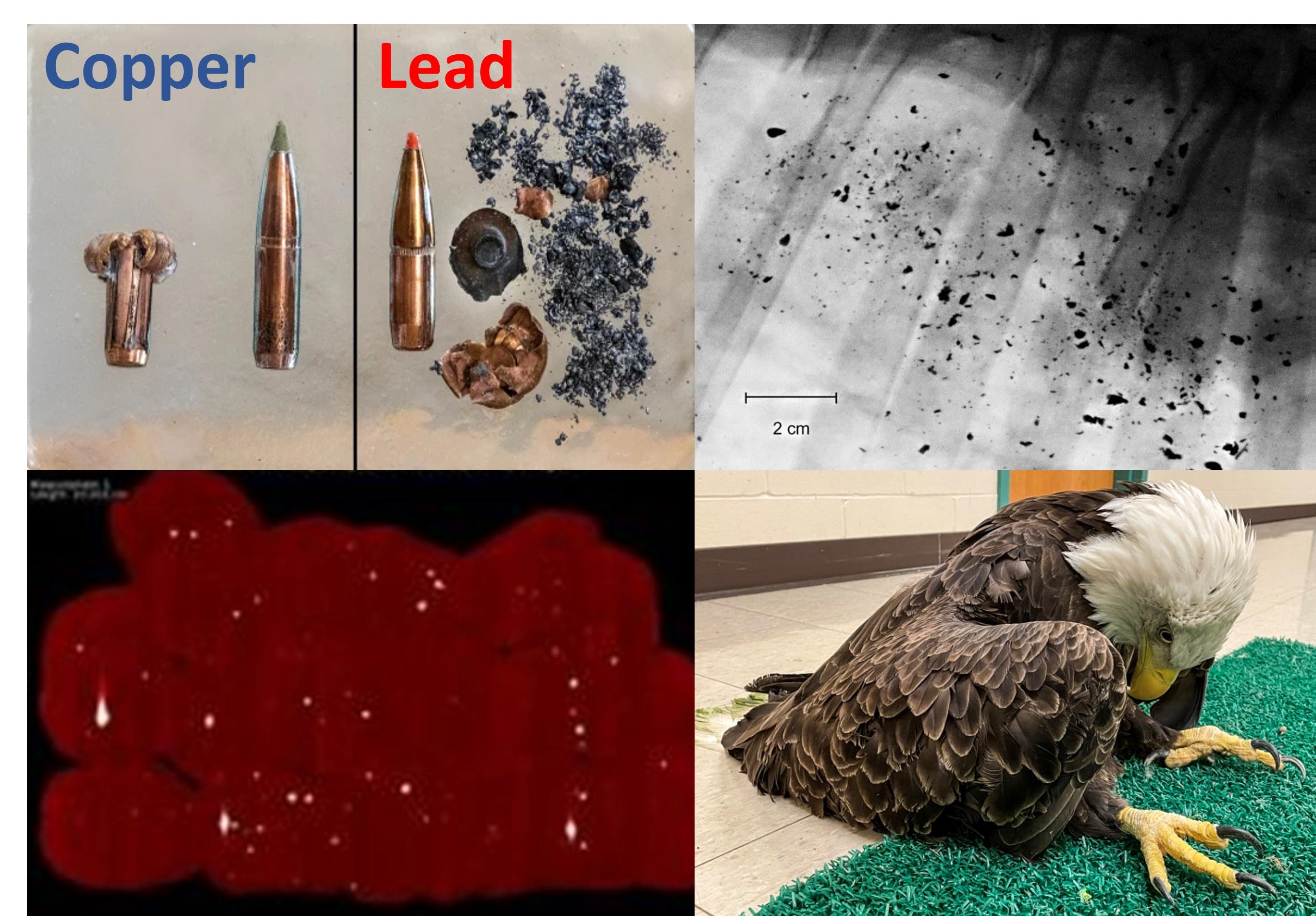
Given how captivating these tricksters are, it’s sobering to contemplate that many will soon succumb to lead poisoning after feeding on the remains of animals shot during the hunting season. When lead bullets are fired into an animal, they fragment into tiny particles that can poison whatever feeds on that animal. The California Condor was driven to near-extinction by ingesting lead bullet fragments in carcasses, and the deaths of about two-thirds of reintroduced condors are attributable to lead poisoning. Eagles are vulnerable, too. In a nationwide study, nearly half of Bald and Golden Eagles had chronic lead poisoning. And ravens suffer as well. During the hunting season, 47 percent of ravens in the Greater Yellowstone Ecosystem had elevated lead levels compared to only 2 percent in the non-hunting season.
Wild birds are canaries in the coalmine that often alert us to environmental harms. But we’ve been slow to recognize and address the risk lead ammunition poses to people. In 2007, a North Dakota doctor x-rayed 100 packages of venison donated to local food banks and found that 59 of them contained visible lead fragments. Other states found alarming levels of lead in their donated venison, too. Years later, though, hunter donations to food banks are still unregulated and hunters nationwide are still eating meat contaminated with lead fragments and feeding it to their families.
Despite the claims of some hunter advocacy groups that no one has ever been harmed by eating animals shot with lead bullets—now dubbed “traditional” bullets—medical doctors and public health experts have repeatedly warned of the perils of lead ammunition to human health and recommended the use of nonlead ammunition for hunting. Their dire warnings are supported by more than 600 peer-reviewed scientific papers on the harm lead ammunition poses to people and wildlife.
No level of lead is safe. Ingesting it can lead to high blood pressure, decreased kidney function, an increased risk of cancer, reproductive issues (infertility, impotence, and miscarriages), digestive problems, cognitive decline, and dementia. In children, lead exposure can lead to lower IQ levels, learning disabilities, and delinquent and aggressive behavior. Early lead exposure has also been linked to an increased likelihood of engaging in future criminal behavior. Studies suggest that the widespread decrease in violent crime in the 1990s resulted from the phasing out of leaded gasoline in the late 1970s and early 1980s. The extent to which consumption of lead ammunition (either by ingesting particles or breathing residues) might be contributing to today’s violence and extremism is unknown—but certainly warrants consideration.
Ravens are known for their neophilia or their love of the new. Moving beyond “traditions” that harm us and embracing the new (nonlead ammunition) seems like a fitting way to celebrate the genius of a sentinel bird like the Common Raven—while helping ourselves, too.
Take a small step to help birds
Birds are in crisis and need our help more than ever. According to the US Fish and Wildlife Service, over 96 million people in North America watch birds. If each of us does something (anything!) to help them, we may be able to reverse declining bird numbers.
If you hunt, please use nonlead ammunition. Transitioning from lead to nonlead ammunition will benefit your health and your family’s wellbeing, along with saving countless birds and other scavengers.
Helping the insects on which so many birds feed is one of the best ways to help our birds. By shredding or bagging leaves in the fall, we unwittingly destroy critical insect refugia. If you have a yard, consider leaving fallen leaves in place to provide habitat for overwintering insects and to preserve their eggs and cocoons. If you don’t want to leave your leaves, gently rake or blow them to the periphery of your lawn so they can continue to provide shelter for overwintering insects.
You can also protect overwintering insects and their future offspring by not cutting back your flower gardens in the fall. If you prefer to cut back your gardens, deposit the cuttings in a brush pile rather than bagging them up so that insects that are hiding inside the plants and insect eggs that have been laid in them can emerge in the spring.
Until next time …
P.S. To read about some of my entertaining experiences with Common Ravens and learn more about the perils of lead ammunition, check out my book Feather Trails—A Journey of Discovery Among Endangered Birds.
Thanks for the article nice to have Ravens & Crows in our area. I’m sure they are happy the Turkey Vultures have gone south. More road kill for them.
With so much evidence showing the harm of lead bullets available, it blows me away that people are still so resistant to switching to non-lead ammo. Thank you for continuing to highlight the dangers to our environment, the wildlife that we love, and also to ourselves. Another great article!