

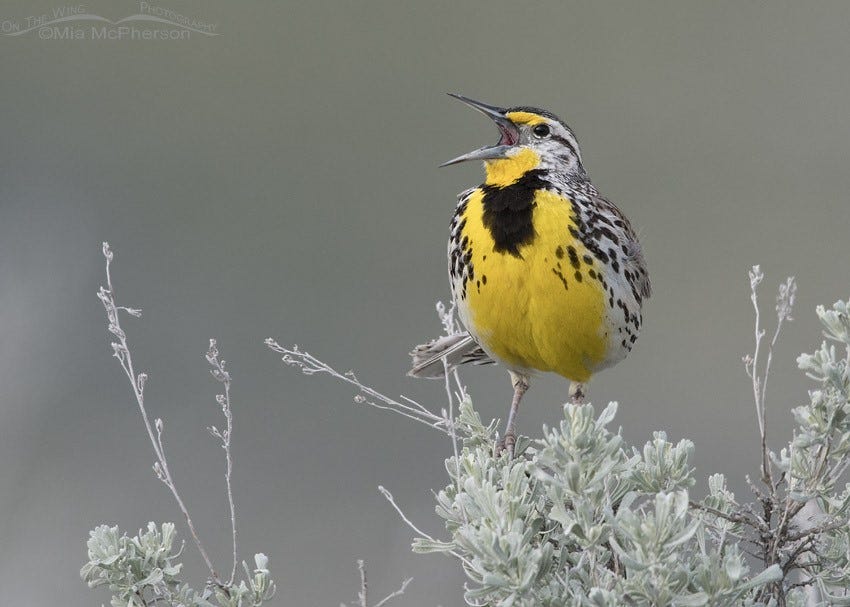
A song of spring, a song of hope
March 5, 2024. I shuffle along on my morning run, breath visible in the cold air, mind going through my to-do list, border collies trotting ahead of me. And then I hear it. A sweet, liquid, warbling song that instantly pulls me back into the moment and into my frosty surroundings. A smile breaks out on my face, and, before I’m even aware of what I’m doing, I raise my arms above my head, as though I’m running through the finish-line tape at a running race. Catching myself almost immediately, I sheepishly lower my arms, but the spontaneous joy—and its attendant celebration—remain. My first Western Meadowlark of the year has just announced that I have indeed reached the finish line. I’ve made it through the winter. Even better, one of my neighborhood birds has survived the perils of migration and returned to its spring and summer haunts. In the days to come, my morning coffee will once again be sweetened by the accompaniment of the meadowlark’s song.
The unfolding of Spring has a special resonance when you recognize the voices of each returning bird species. But there is a cost, too, when you don’t hear a song in a place where you’ve always heard it before. Each year, I worry more about the meadowlarks’ return. My anxieties are not misplaced. Grasslands are the most endangered habitat in the US, and grassland birds like the meadowlark are the most at-risk group of birds. Collectively they have declined 50 percent in the past 50 years. Formerly common birds like the Eastern Meadowlark (whose population is down 75 percent) and the Field Sparrow (down 69 percent) have disappeared from many of their prior haunts. We can take heart, though, in the knowledge that targeted conservation works: decades of effort have restored many waterfowl and raptor species whose populations had once dwindled alarmingly. Now, nationwide collaborative efforts—many funded through the Farm Bill—are focusing increased attention on conserving, connecting, and restoring some of our imperiled and degraded grassland habitats, benefitting birds and those who work the land.
In the weeks after I hear my first meadowlark, my morning runs take me through one songster’s territory after another. I relish the symphonic reassurance. Western Meadowlarks are faring better than their beleaguered eastern counterparts, and the singing birds that I’m hearing have returned to their spring home, ready to focus their attentions on raising this year’s clutch of young. My spirits lift, taking wing on the meadowlarks’ song. Emily Dickinson captured it perfectly for millions of us—past and present—when she wrote that “Hope is the thing with feathers.”
Take a small step to help birds
It is easy to feel helpless in the face of climate change, habitat destruction, and disappearing wildlife. But if each of us does something to help, we may be able to reverse declining bird numbers.
Here are a few things you can do:
Habitat conversion—particularly from industrialized agriculture—and widespread pesticide use are among the greatest threats to grassland birds. So, when you can, support small, organic farms by frequenting your local farmer’s market.
Many birds are killed or fatally damage their wings by flying into wire fences. If you have such fences, you can clip on special markers to make the wires more visible to birds.
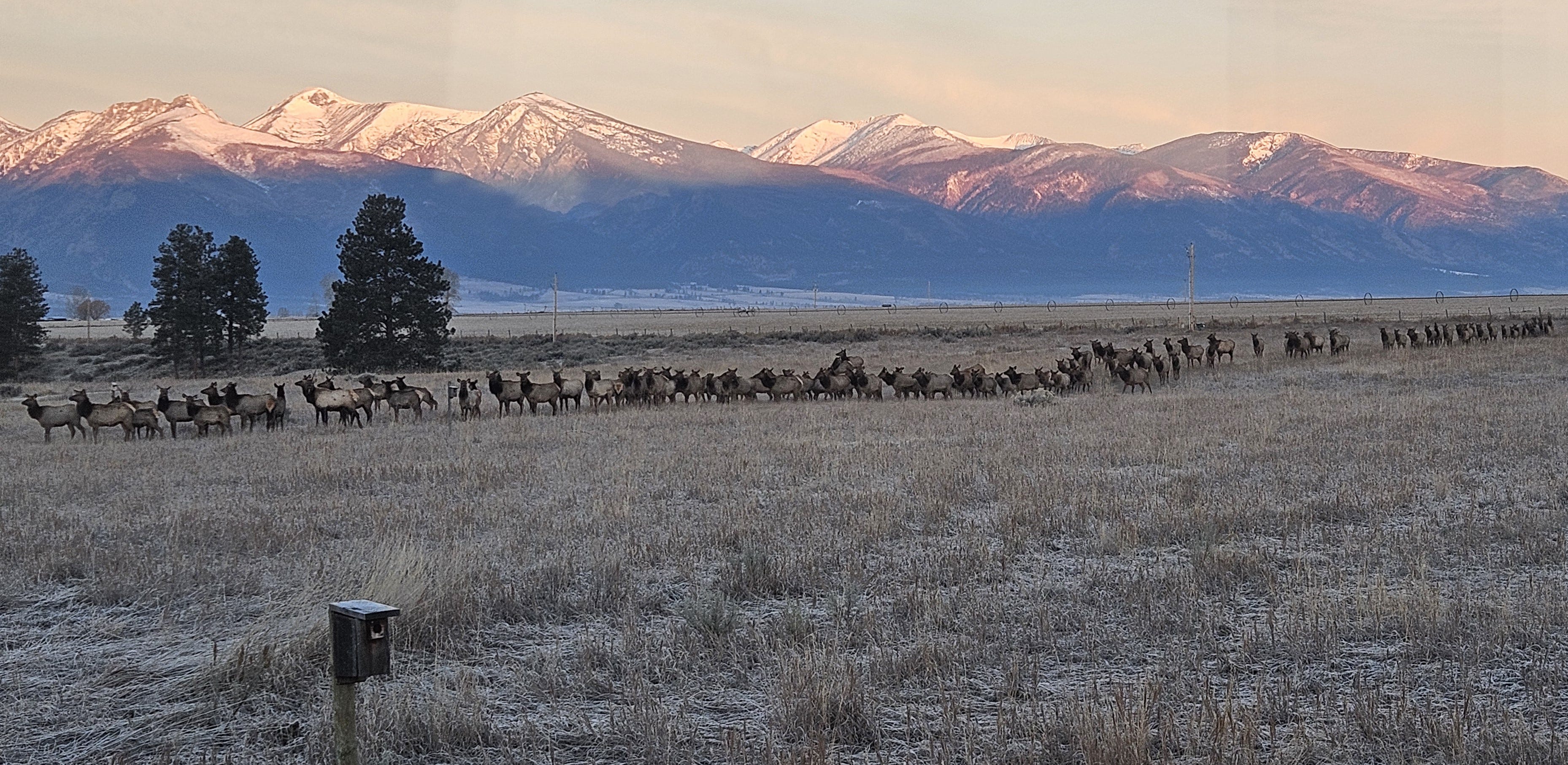
Consider removing fences that you don’t need. Doing so not only helps birds but can also help other wildlife. Decades ago, I removed the barbed-wire border fence that lined my small Montana property. When my neighbors bought their property a few years ago, they installed a four-strand, wire perimeter fence. Now, the local elk herd that long used their land as a travel corridor has switched to using my property to avoid having to cross one of the many fences that impede their travels.
If you own grassland habitat that you mow, you can help birds by mowing as late as possible, after ground-nesting birds have fledged their young.
Many grassland birds nest on the ground where they are vulnerable to prowling cats. Keeping our cats indoors, particularly during the nesting season, is a win-win for birds and cats: birds can successfully raise their young and indoor cats typically live about 10 years longer than cats that roam outdoors.
Thank you for reading and thanks for helping birds!
Until next time …
P.S. Eastern and Western Meadowlarks sound quite different; both songs are lovely, iconic sounds of spring.
For more information about how targeted conservation efforts have helped birds, please check out my new book Feather Trails—A Journey of Discovery Among Endangered Birds, which will be published May 2, 2024, and is available for pre-order on Amazon.
Great article, Sophie! I loved the line about the morning coffee being sweetened by the accompaniment of the meadowlark song. I heard my first western meadowlark song here in southern Oregon about a week or two ago.
Great suggestions. And the Dickinson quote is perfect, as April is National Poetry Month!