
Forest sprite

Hidden in plain sight
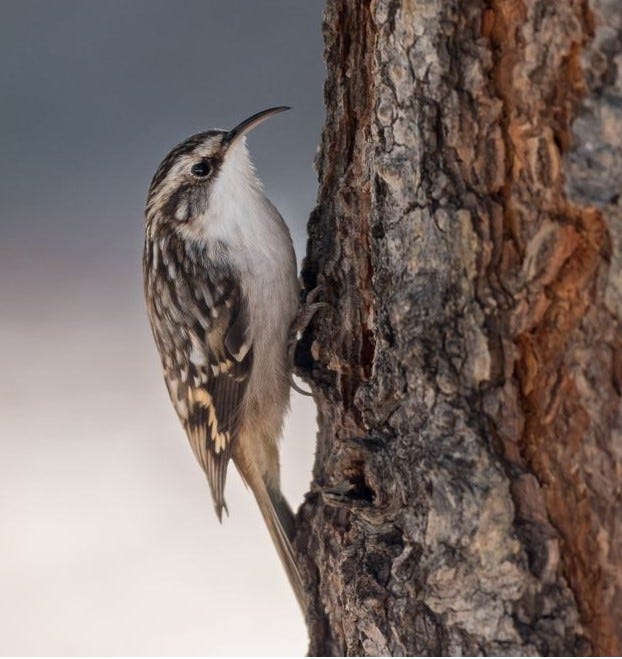
I am on a quest to see an elusive bird. A tiny bird. One that renowned author Pete Dunne has called a “wisp of a bird.” For the last several years, this little sprite that visits back yards and haunts ancient forests has eluded me. But it wasn’t always so.
Decades ago, I helped monitor bird populations in several national forests in Arizona. As part of that work, we trapped birds in long, fine-meshed nets known as mist-nets, then placed identifying bands around their legs so we could recognize individuals and determine their fates over time. After carefully extricating birds that had become tangled in our nets, we placed them in cloth bags then brought them to a central processing station. We then measured, weighed, and banded the birds we’d trapped. Upon reaching into the cloth bags to pull out a bird for processing, we never quite knew what to expect, though a sharp peck from a woodpecker bill or a bite from a grosbeak quickly clued us in.
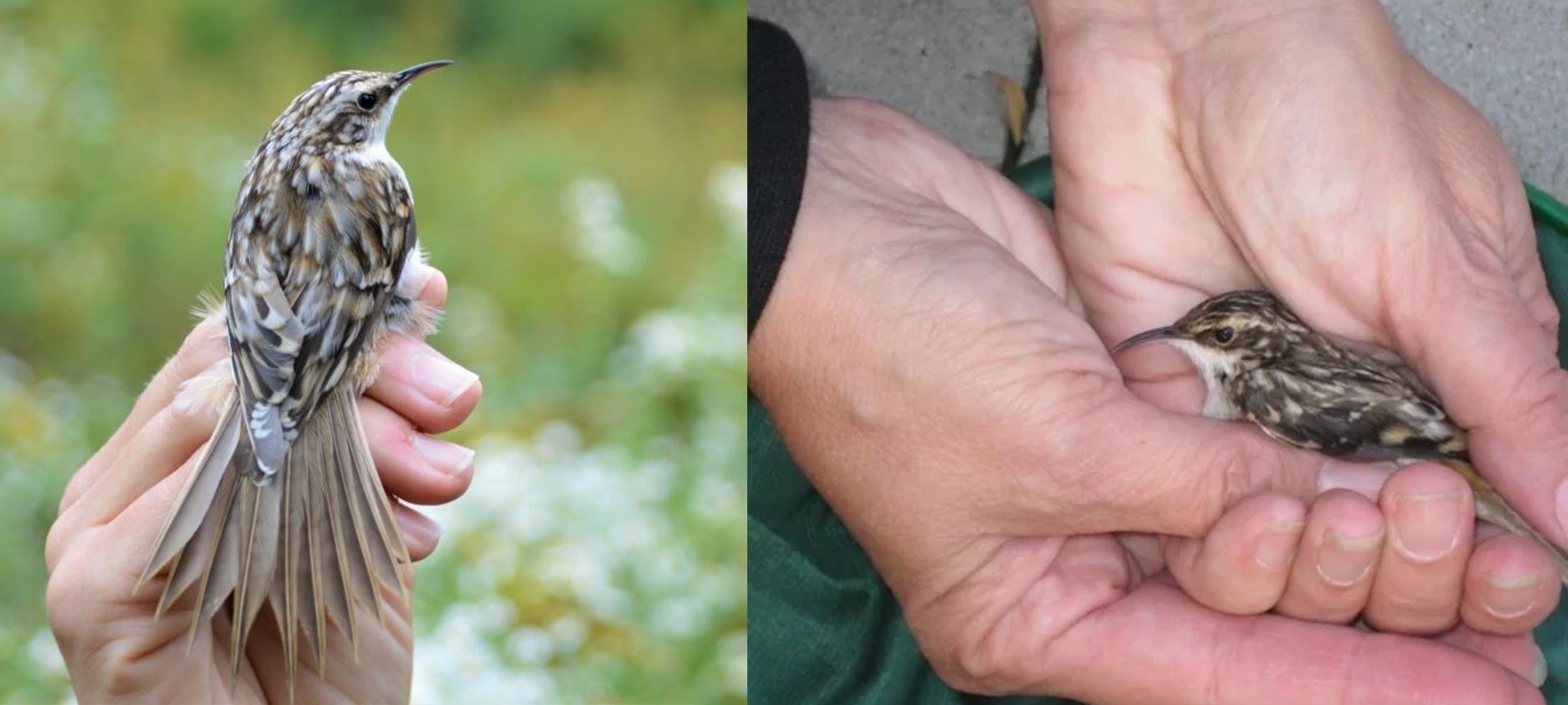
On one occasion, I reached into a bag that appeared weightless and gently closed my hand around the tiniest puff of feathers imaginable. A hummingbird, I thought. Carefully drawing out the bird, I looked at it in astonishment. It looked as slight as a hummingbird but it had a downward-curved bill, and I could think of no hummingbirds whose feathers were this beautiful mosaic of browns, tans, grays, and whites. For a moment, I stared in bewilderment at the little creature before it suddenly dawned on me. Oh! It’s a Brown Creeper! Having only ever seen creepers at a distance before, I hadn’t quite realized how tiny they are. Birds often look bigger through our binoculars than they do in the hand. I quickly processed the feisty bird and released it, but that moment of wonder when I held that delicate creature in my hand stayed with me.
The Brown Creeper is found in mature forests with large trees throughout much of North America during one season or another. In summer, it is usually found in coniferous forests, but in winter, it frequents a wider variety of wooded habitats. For many years, I found creepers every time I visited a particular Wyoming cemetery in the depth of winter. Creepers often join mixed-species flocks of chickadees, nuthatches, and woodpeckers in winter. But unlike White-breasted Nuthatches, which search out insects by traveling down a tree trunk, creepers always begin foraging at the base of trees and spiral upwards. Bracing themselves with stiff tail feathers, they hitch up the trunk with wide-spread legs and clinging claws. Once they reach a certain height, they flutter leaf-like to the base of a neighboring tree and begin another upward journey, poking their downcurved bill into hidden crevices to extract insects.
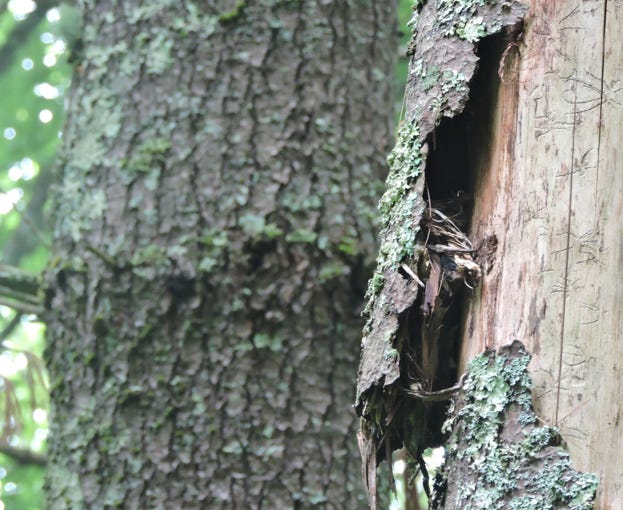
That long ago summer when I cradled a creeper in my hand, I also monitored a pair’s remarkable nest. I’d found it near a forest opening, tucked under a loose sheaf of bark, and spent hours watching the petite birds slipping into their tented refuge to tend their growing brood. Creepers typically build their nests behind peeling bark on live, dead, or dying trees. The female uses the sticky silk of insect cocoons and spider egg cases to glue a hammock-like base of twigs and bark strips to the inner surface of the tree, then adds a nest-cup made of grass, leaves, mosses, lichens, feathers, and hair. Though vulnerable to predators such as squirrels, the cozy nests are usually well protected from inclement weather.
It has been years now since I last saw a creeper. The birds are widespread and not uncommon, but they are one of North America’s most inconspicuous and cryptic birds, blending into the tree bark where they live out their lives. I will either need some luck or will have to search better habitats to find one. In the meantime, I delight in knowing they’re out there, hitching up trees on subzero winter days, cozying up with fellow creepers on frigid nights, and tending to their hidden nestlings as spring warms into summer. Brown Creepers epitomize the fragility and the strength of birds. Thriving against all odds, this elusive forest sprite is an unforgettable prize on any woodland outing—whether or not you’re on the lookout for one.
Take a small step to help birds
Birds are in crisis and need our help more than ever. According to the US Fish and Wildlife Service, over 96 million people in North America watch birds. If each of us does something (anything!) to help them, we may be able to reverse declining bird numbers.
Although I say it often, it cannot be said enough: dead and dying trees provide critical homes for wildlife. If you own property, leave standing dead trees in place, unless they are a safety hazard. You’ll be rewarded with phenomenal wildlife sightings and the knowledge that you’re providing essential habitat for birds.
Introduced, non-native species are one of the main threats to global biodiversity. As nesting season begins, you can help our native bluebirds and swallows by trying to limit the number of non-native House Sparrows that you inadvertently might be subsidizing. House Sparrows will kill baby swallows and bluebirds, and take over a nest cavity or box for themselves. To dissuade House Sparrows, place nest boxes as far from buildings as possible, don’t scatter bird seed on the ground, and (if you feed birds) feed black oil sunflower seed—rather than seed mixes that include millet and milo—in tube feeders with short perches and small ports.
Every bit of natural habitat has value for the insects that pollinate our plants and feed our birds. If you have a lawn, consider shrinking it slightly this summer by leaving the border or some patch of it unmown or by planting a few native shrubs. The micro-wildlife and your local birds will thank you—and you’ll spend less time mowing!
Until next time …
P.S. I am honored that bird author Pete Dunne wrote the introduction to my book Feather Trails—A Journey of Discovery Among Endangered Birds. You can get 35% off (by using the code CGP35 at checkout) if you buy the book from Chelsea Green Publishing. If you’ve read the book, please consider rating it on Goodreads or Amazon.
Huge thanks to those who have supported my writing and bird-conservation work by buying me coffee!
Creepers ARE hard to see which makes any encounter with them extra special. One of the many species we risk to lose as old growth forests are logged. Another great read!
Oh, Sophie! You'll have to come to my place this fall through spring and sip coffee and visit. I had these little gems right outside my front window fairly regularly this winter. And if that fails, we'll visit the cemetery and add in the crossbills that frequent there, but rarely show up at my house! I loved the post, and the photo of the nest. What amazing wisps indeed!