

…above ground
It is one of August’s highlights in my part of the world, a glorious sight that breaks my heart a little each year. As the landscape swelters under summer heat, swallows—in the tens, the scores, the hundreds—flock together in preparation for their southward journeys. For several days, I enjoy the chaos of accumulating swallows, which swoop and swirl around me as I pass by their gathering areas—making me feel, for a moment, like I’m part of the flock. And then, suddenly, they are gone. And the skies echo with their absence.
Reflections of the season, migrations such as these link distant lands. But for much of human history the seasonal disappearance of birds was a profound mystery that fostered wild speculation.
In the fourth century BCE, Greek philosopher and scientist, Aristotle, sought to explain the seasonal disappearance of local birds. While he recognized that some might fly to warmer places, he hypothesized that others hid themselves by turning into different species (summer birds transformed into birds that appeared in winter) or by hibernating in crevices or holes in the ground. Close to two thousand years later, in 1555, a Swedish archbishop refined Aristotle’s beliefs about hibernating swallows by claiming they did so in the mud at the bottom of ponds and marshes. Although detractors offered competing theories over the years, the idea that swallows hibernated in mud was widely accepted until the 1800s.
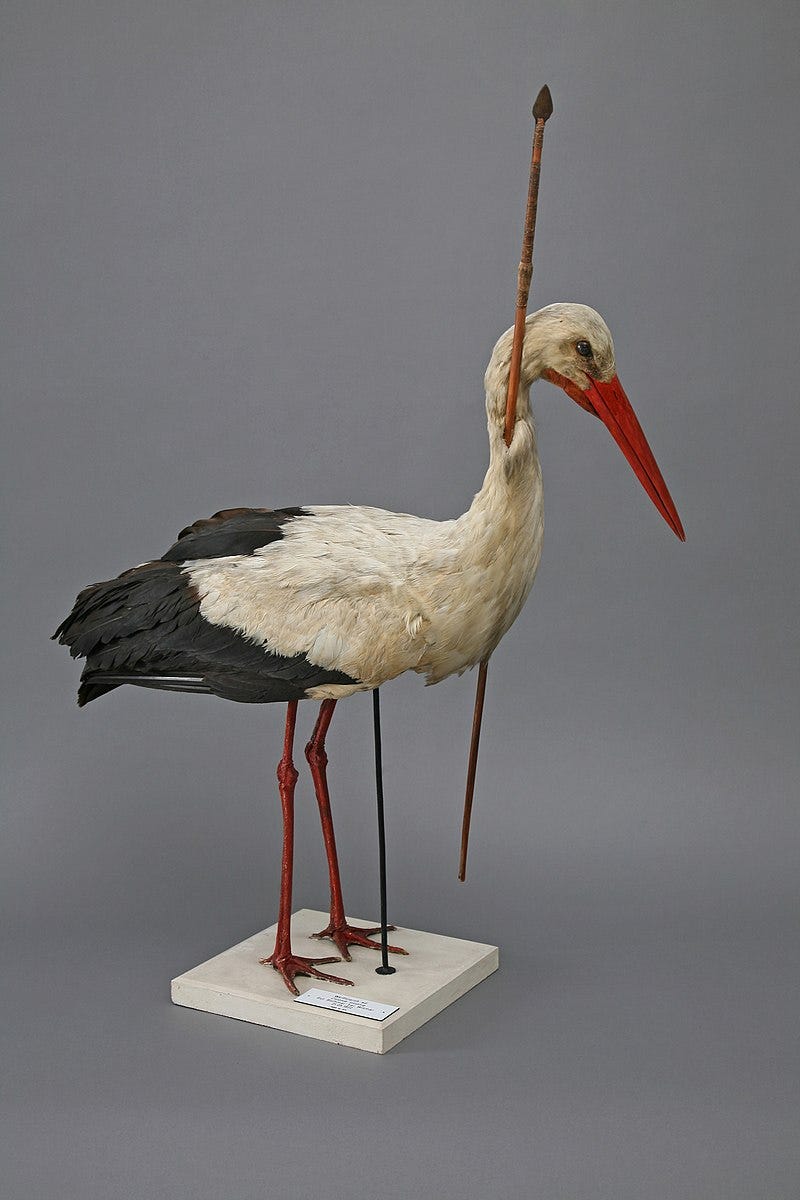
The arrival of a white stork in a German village in the spring of 1822 helped upend long-held beliefs about the changing plumages and bizarre hibernating habits of birds. Causing quite a stir, the unfortunate stork appeared with a thirty-inch African spear through its neck. The pfeilstorch, or arrow stork as it was dubbed, provided one of the most compelling early clues that birds migrate long distances—even as far as other continents—in search of milder weather and more abundant food. Since then, scientific research and ever-more-powerful technologies have further unraveled the mysteries of bird migration.
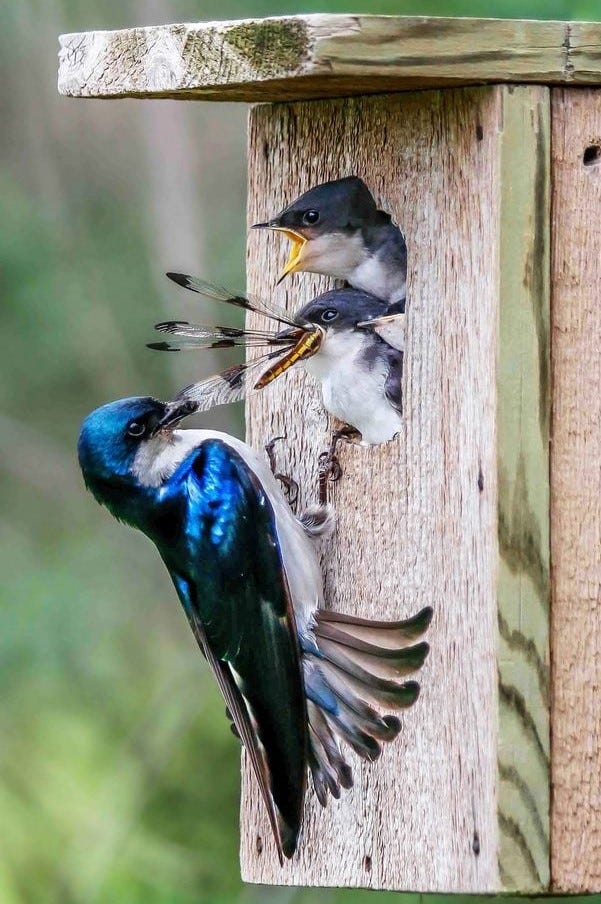
The return, in late-March, of Tree Swallows—with their deep-blue iridescent backs and crisp white fronts—to my rural Montana home puts winter to rest, even when the weather fails to cooperate. The first swallow species to arrive in their northern breeding grounds, Tree Swallows can cope with unexpected snowstorms and inclement weather by feeding on fruits, seeds, and berries when the insects that are their dietary staple are unavailable.
With their effortless, acrobatic flights and their dramatic aerial battles over nest cavities, Tree Swallows add beauty and drama to the season. Almost as soon as they arrive, they compete ferociously for nest boxes that haven’t already been claimed by bluebirds in the field fronting my house. Historically, Tree Swallows nested in cavities in standing dead trees near wetlands, but the proliferation of bluebird boxes has supplemented natural nest sites that have grown more scarce because of humanity’s ongoing landscape impacts.
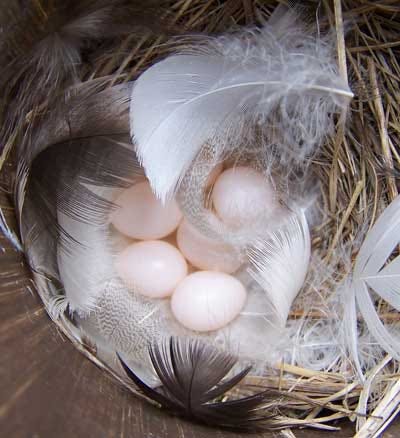
Once cavity ownership is established, female Tree Swallows gather grasses to build their nests. Among their most enchanting characteristics, Tree Swallows use feathers to line their inner nest cup. They will travel several miles to find the white, gray, or light-brown waterfowl feathers they prefer, but in dry landscapes like mine, they often make do with whatever feathers they can find, including those of chickens, magpies, owls, and doves. Research has shown that nests with more feathers have greater hatching and fledging rates. Because they readily use nest boxes, Tree Swallows are among the best studied birds, and many of us enjoy watching them raise their young each year.
And then they move on. At least from northern parts. But though I mourn their absence, the onset of winter feels less dark knowing that instead of settling into murky lake bottoms, Tree Swallows are lighting up their migratory pathways and southern haunts, bestowing their glitter and their grace—above ground—on all those who see them.
Take a small step to help birds
Birds are in crisis and need our help more than ever. According to the US Fish and Wildlife Service, over 96 million people in North America watch birds. If each of us does something (anything!) to help them, we may be able to reverse declining bird numbers.
It’s that time of year again! Time to check your local BirdCast (or bird forecast) to learn how many birds and which species are flying over you each night as you sleep. The numbers can be dazzling, and sharing facts about migratory birds is a good way to captivate and inspire others to care about birds.
Insectivorous birds are undergoing steep population declines as insect populations plummet. Refrain from using pesticides and support local pesticide regulations. A growing number of states, including Vermont, New York, and Nevada have stepped up to restrict the use of neonicotinoids—pesticides that are decimating insects, contaminating waterways, and harming birds and fish worldwide.
If you live in a rural area, providing nest boxes can be a boon for Tree Swallows and bluebirds. Ready-made boxes are widely available or you can build your own. Make sure that the entrance hole is the right size for the birds you’re trying to attract.
If you can’t prevent House Sparrows (an introduced species that will kill native bird nestlings and claim their nests) from using your nest box, it’s best not to install one. Ways to reduce House Sparrow use of your nest box include placing the box as far as possible from buildings, providing only black oil sunflower or thistle seed in your bird feeders, and refraining from scattering seed on the ground.
Until next time …
P.S. To read about Violet-green Swallows capturing Peregrine Falcon feathers to line their nests, check out my book Feather Trails—A Journey of Discovery Among Endangered Birds.
Yikes for the arrow stork! I so love the swallows period. They are so graceful! Love their feathered nests. Beautiful piece again! Thanks so much Sophie for all your education and accompanying images as well as your recommendations.
A lovely read on a cool late-summer morning.