

An American celebration
Unlike much of the country, we had a concerningly mild winter in the Rocky Mountain West. Even so, each bird that returns to my rural Montana neighborhood has me celebrating spring. Once again, the meadowlark’s liquid song is my morning soundtrack, Mountain Bluebirds flit around my house like fragments of a summer sky, and an elegant Say’s Phoebe proclaims his territory from my rooftop with a sweet, mournful whistle. The Bobolinks that wintered in Argentina’s grasslands and the Eastern Kingbirds that flocked to the Amazon basin won’t return until early May. But incipient signs of spring have me thinking about the long journeys that these and other birds are making. Many are now passing through Central America, and I picture them amidst birds that dazzled me when I worked and birded in these tropical haunts long ago.
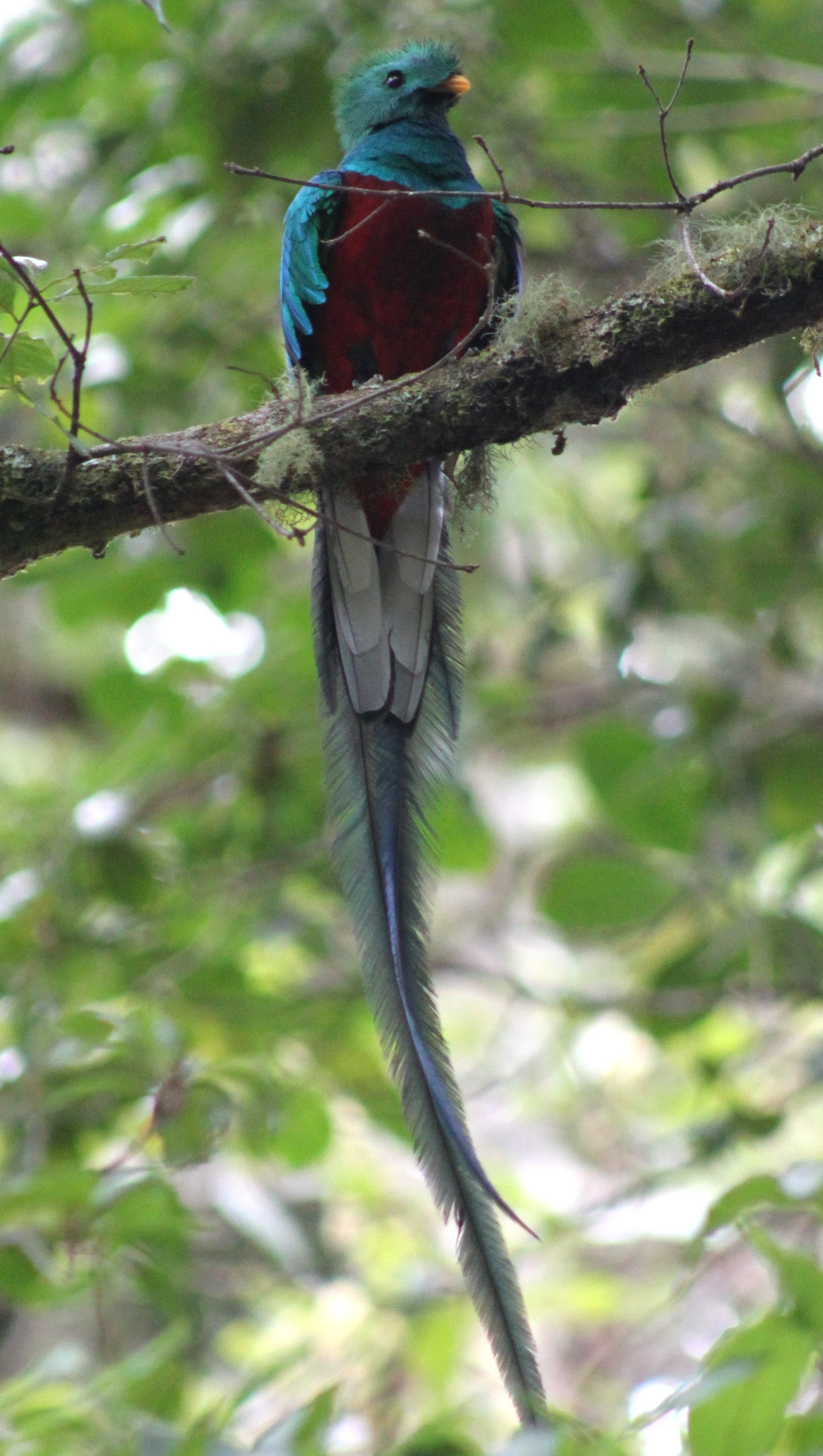
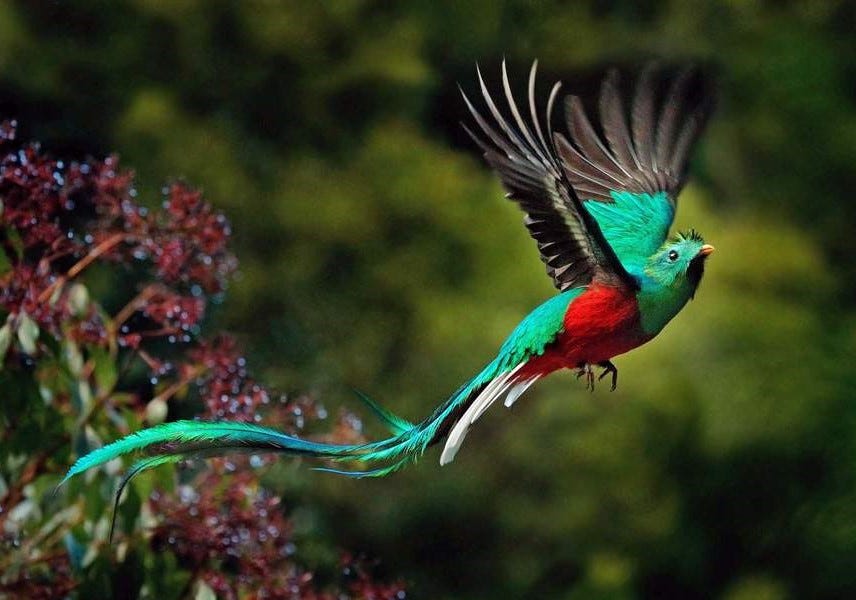
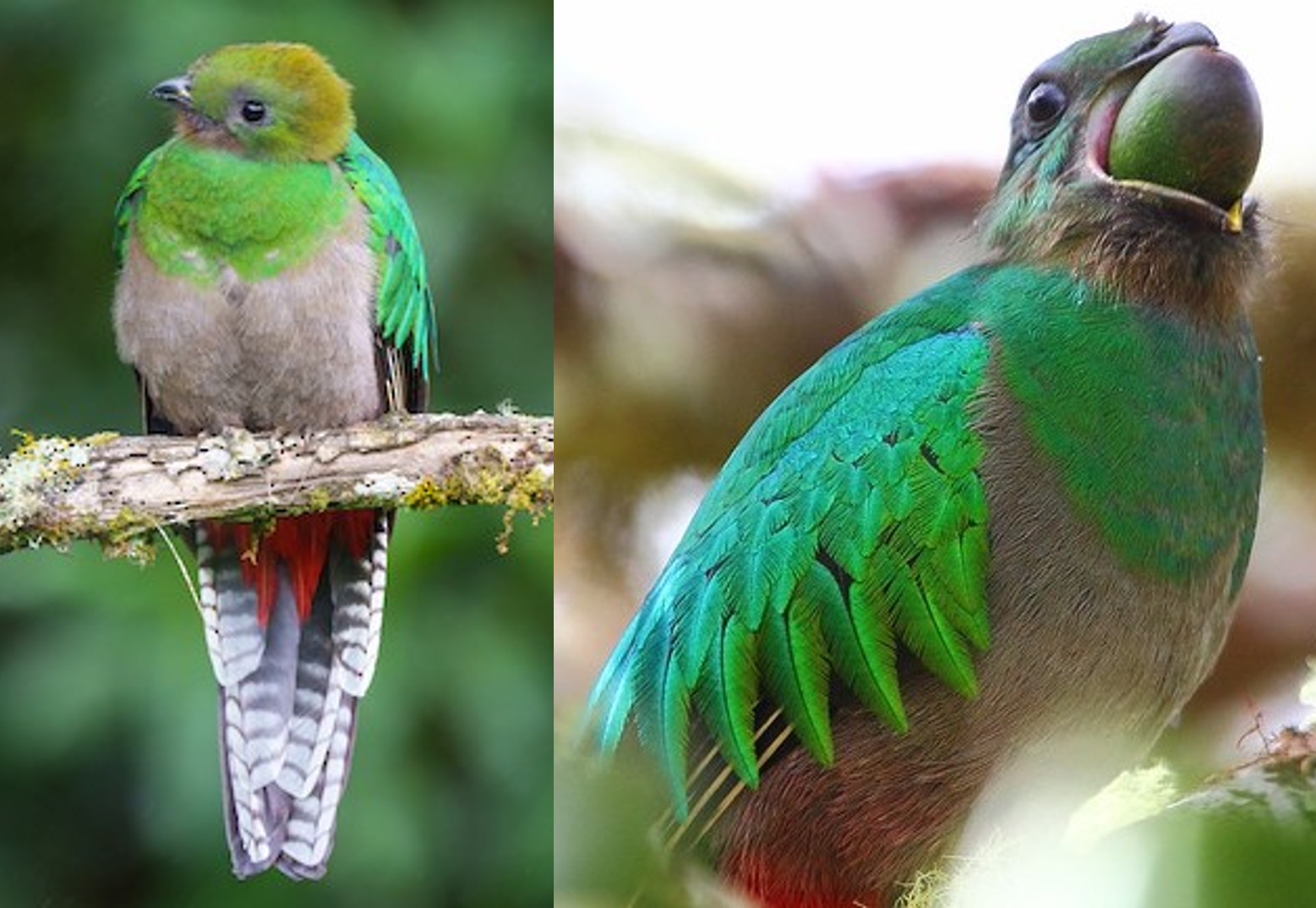
In March 2012, I emerged from a forested cabin in Panama into a song-drenched world of tangled greenery and drifting mist. Sitting on the adjacent deck, my hands wrapped around a cup of coffee, I relished the symphony as I eased into the chilly morning. I was unfamiliar with the songs of most Panamanian birds, but I recognized those of a few cloud-forest residents. So when I heard a plaintive, repeated keow kowee, my gaze snapped up to a nearby tree. And there it was. The Resplendent Quetzal—one of the most magnificent birds in the Americas. Its iridescent emerald head and scarlet front blended into epiphyte-laden trees that harbored every shade of green and a color-burst of occasional blooms. The pigeon-sized quetzal’s long floating tail streamers (technically uppertail covert feathers), which can be as long as three feet—swayed in an imperceptible breeze. Soon, I spotted another male quetzal perched close by. Then, in a neighboring tree, a third, alongside a more subtly garbed female, with grayish-brown underparts and a golden-green head.
Inhabiting Central America’s cloud forests—from southern Mexico to Panama—the Resplendent Quetzal feeds mainly on fruit, disseminating the seeds of more than 30 tree species. It is especially known for feeding on wild avocados, which it swallows whole (later regurgitating the pits). It will also prey on insects, frogs, lizards, and snails.
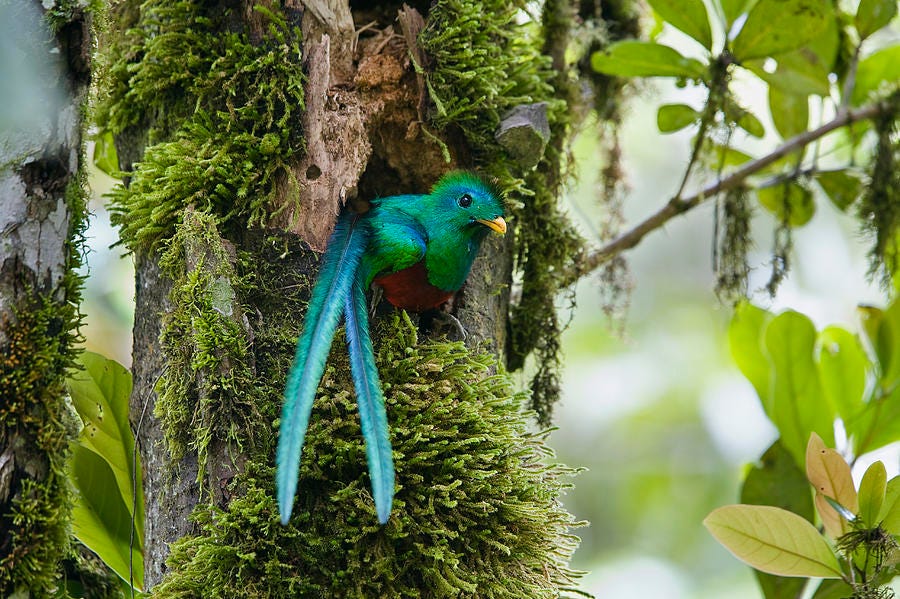
I’ve been fortunate with Resplendent Quetzals. My first distant view of the bird in Guatemala was followed, the next field season, by the sight of a nesting pair—the male’s tail streamers poking out of the tree cavity as he took his morning turn incubating the pair’s clutch of two eggs in a protected reserve. Years later, I observed a male quetzal in the low evening light of a Costa Rican forest. And I’d seen several more in Panama before my morning coffee in the cloud-drenched forest. But never had I seen four Resplendent Quetzals at once—while expending so little effort.
My Panama trip had been filled with new and exotic birds. And I’d seen familiar ones, too. In a small village outside the quetzal cloud forest, I’d come across a tiny Wilson’s Warbler—a sunflower-yellow flash with a jaunty black cap—a bird I sometimes see on summer hikes. As I watched the elegant quetzals in their mist-draped trees, I was reminded of how much these and other animals, along with the region’s human inhabitants, shape the tropical habitats that so many migratory birds—and visiting birders—return to each year.
When Puerto Rican rapper, singer, and songwriter Bad Bunny finished his 2026 Super Bowl performance by calling out the names of the nations that constitute the Americas, my mind sparked with images of the birds, landscapes, and people that captured my heart during formative years working and birding in many of the countries he named. The Resplendent Quetzal reflects the brilliance and beauty to be found in this great panoply of nations. Our respective local bird communities would not be what they are without the contributions of our hemispheric neighbors. Unhindered by political boundaries and divisions, birds—much like music—connect us, and can unite us. Bad Bunny had it right, “Together, we are America.”
Take a small step to help birds
Birds are in crisis and need our help more than ever. According to the US Fish and Wildlife Service, over 96 million people in North America watch birds. If each of us does something (anything!) to help them, we may be able to reverse declining bird numbers.
Resplendent Quetzals and other tropical birds are threatened by climate change and deforestation. Worldwide, beef production is the primary driver of deforestation (clearing land to graze cattle and produce livestock feed). If you eat beef, you can help by having at least one meat-free day a week. Reducing beef consumption helps decrease tropical deforestation and reduces methane emissions (from cattle) that contribute to climate change.
To help migratory and tropical birds, consider buying shade-grown coffee whenever you can. Sun-grown coffee (which typically produces higher yields) is planted on cleared land, is often treated with pesticides, and harbors very few birds and other animals. Shade-grown coffee, on the other hand, develops under a partial canopy of trees. The greater structural complexity of shade-grown coffee plantations is more akin to a natural forest and provides habitat for a variety of birds, insects (including butterflies), bats, reptiles, and other organisms.
If you travel to Latin America or the Caribbean, visit and support protected areas to ensure that local communities benefit from conserving their natural resources. If you don’t anticipate traveling south of the US border, you can help tropical birds by supporting conservation groups like the American Bird Conservancy and The Nature Conservancy, which protect reserves, plant trees, and improve habitat for birds in the Americas.
Until next time …
P.S. You can read about some of my tropical adventures in Feather Trails—A Journey of Discovery Among Endangered Birds. If you’ve read the book, please consider rating it on Goodreads or Amazon to help spread my bird conservation messages.
Huge thanks to those who have supported my writing and bird-conservation work by buying me coffee!
I wish to be referred to henceforth as "The Resplendent Bryan".
This is lovely. And those photos! Someone we both know and love has an amazingly resplendent quetzal t-shirt that was gifted to him by an amazing Guatemalan pal of his. Since I can't post a photo here, I will send via email...