
Neophilia

A seabird celebration
Most bird lovers would think it a compliment to be compared to the Common Raven. Ravens are intelligent and opportunistic, playful and resourceful. These corvids are also known for their neophilia—their love of the new. Young ravens are especially quick to check out unfamiliar objects as they explore their world. It’s a rare birder—a more obsessive version of the casual “birdwatcher”—who doesn’t also exhibit neophilic tendencies. I am captivated by birds of all kinds and enjoy seeing them engaged in everyday activities. But, like my fellow birders, I am not immune to the thrill of seeing a bird species I’ve never seen before, and I’ve traveled widely to observe such “new” birds.
Seeing a “lifer,” as birders dub the first bird of a particular species they ever see (or sometimes hear), gets harder the more we immerse ourselves in the avian world. Those who become addicted to seeing the never-before-seen must travel farther afield to catalog new bird sightings. Or, sometimes, they just head out to sea.
Because many seabirds live miles from land (except when breeding on remote islands or coastal cliffs), they typically elude all but the most stalwart birders (or sailors). You’ve likely seen swallows, sparrows, and thrushes but what about jaegers, shearwaters, and storm-petrels? Having lived mostly in landlocked states, I’ve seen relatively few seabirds. And I’ve been unlucky with pelagic trips—specialized boat trips that transport participants miles offshore to view ocean wildlife. Trip after scheduled trip has been cancelled, usually because of bad weather. Finally, in 2014, I managed to go on a pelagic trip off the coast of Monterey Bay, California, where I relished my first sightings of whales (feeding and breaching humpbacks), albatrosses, skuas, and shearwaters.
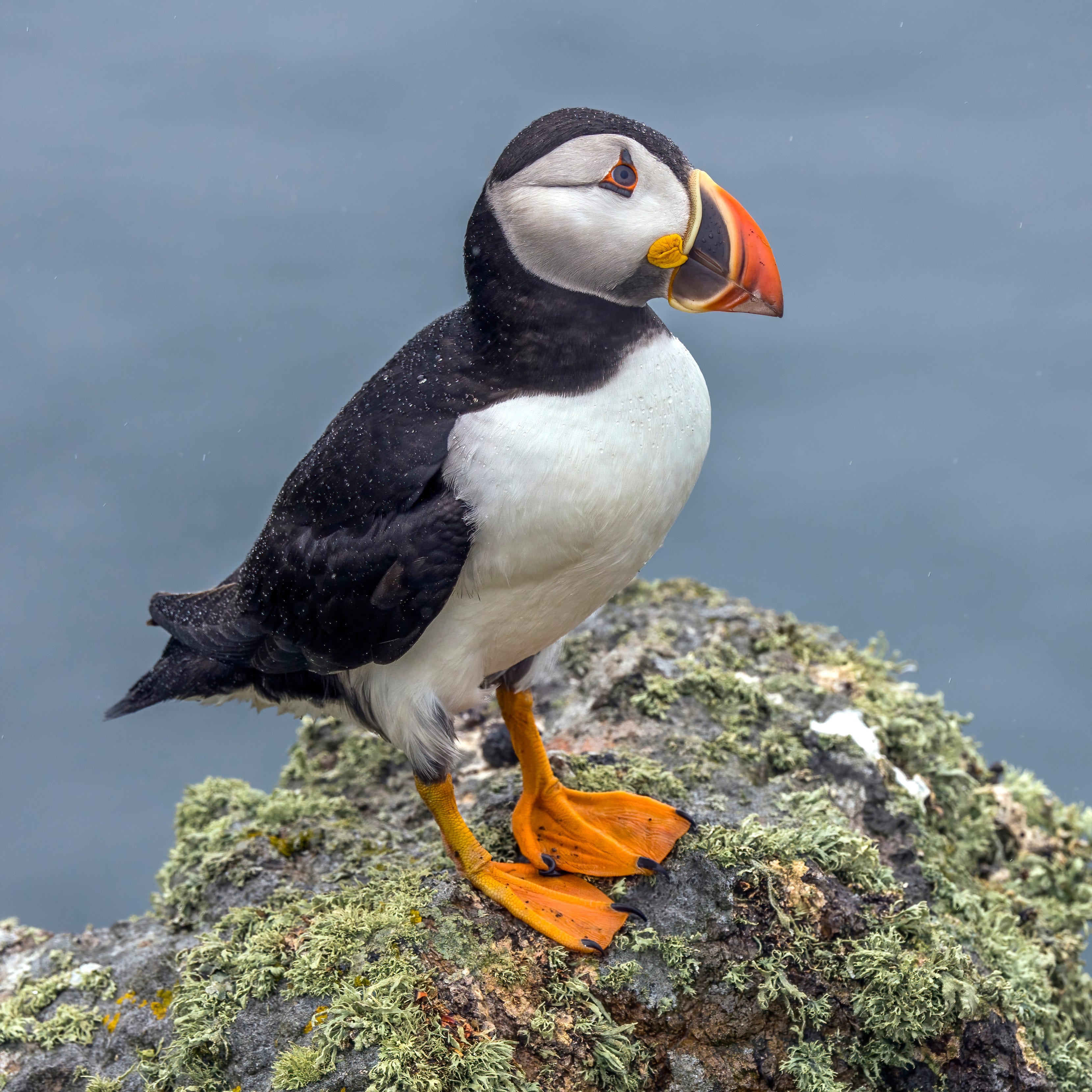
But I’ve wanted to see one particular seabird—the Atlantic Puffin—for most of my birding life and have never had the opportunity. So when the organizer of the Acadia Birding Festival in Maine asked me to be a keynote speaker this spring, I jumped at the chance. Not only would I be able to share conservation messages with avid birders from Maine and beyond, but I’d also get to visit Acadia National Park and perhaps see a long-awaited puffin. I signed up for the festival’s pelagic trip and spent months anticipating my first puffin.
In North America, the Atlantic Puffin breeds only in eastern Canada and on Maine’s coastal islands. The foot-tall birds with the clownish eyes and large, colorful bills also nest in Greenland, the United Kingdom, Norway, and especially Iceland, which hosts about half of the global population. Puffins once bred prolifically on Iceland’s mainland, but in the 1930s a non-native species—the American mink—escaped captivity and spread across the country, eradicating seabird colonies as it went. Today, most of Iceland’s puffin colonies are found on offshore islands. Outside of the breeding season, the birds become more solitary and spend their time out in the open ocean.
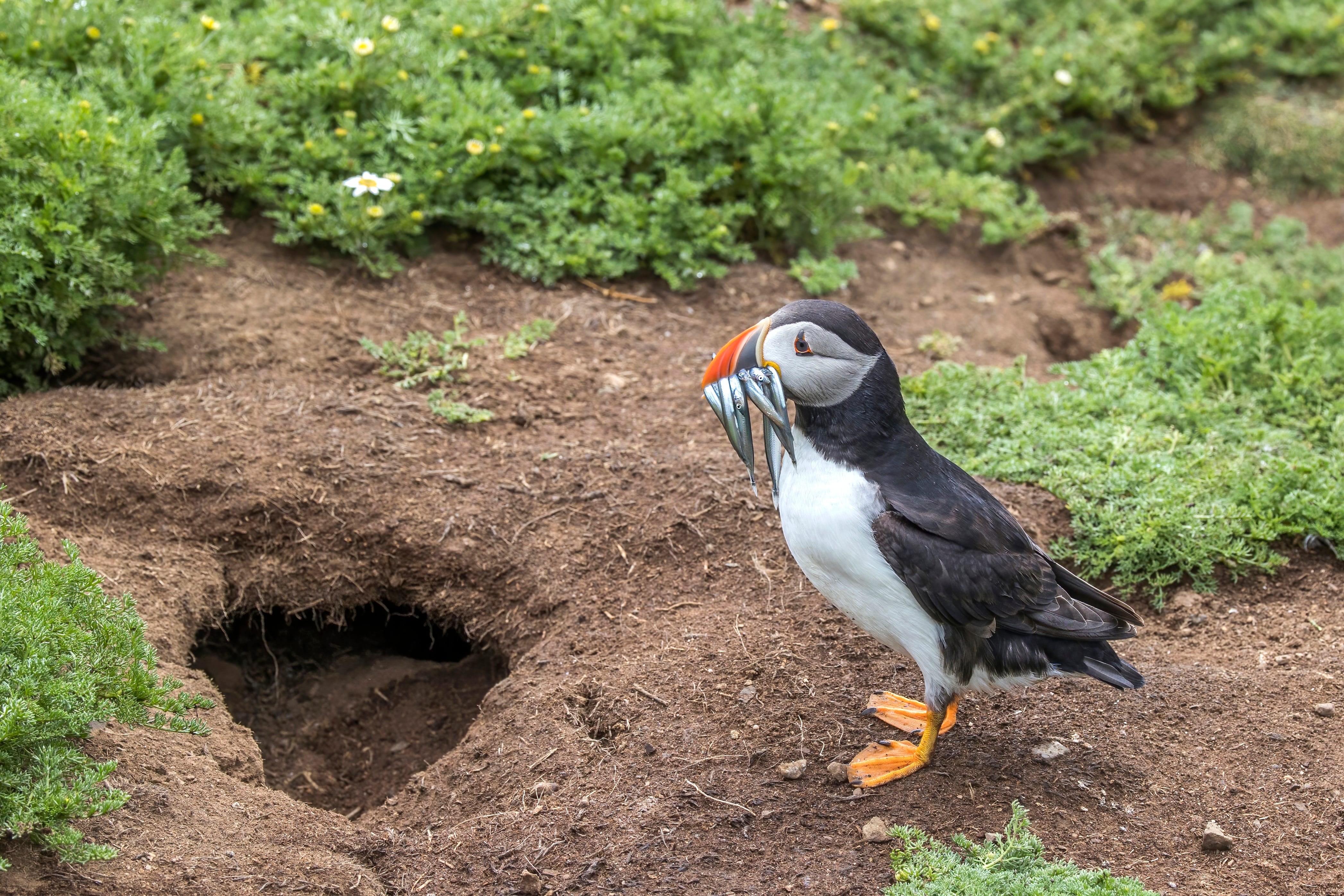
Unsustainable hunting in the 1800s and early 1900s eliminated Atlantic Puffins from the US. But thanks to laws enacted to conserve birds, the establishment of protected areas, and efforts to reintroduce puffins and restore seabird colonies, over 2,000 puffin pairs again breed in Maine. I was hoping to see just a few of these island nesters. The day before our pelagic trip, though, the skies darkened and the seas churned. And, in an all-too-familiar pattern, the trip was cancelled. I was heartbroken.
Fortunately, though, the festival’s marvelous organizer subsequently booked some of the festivalgoers on a local puffin and lighthouse cruise as a consolation prize. We might not see shearwaters and storm-petrels, but we would visit a small puffin breeding colony on Petit Manan Island.
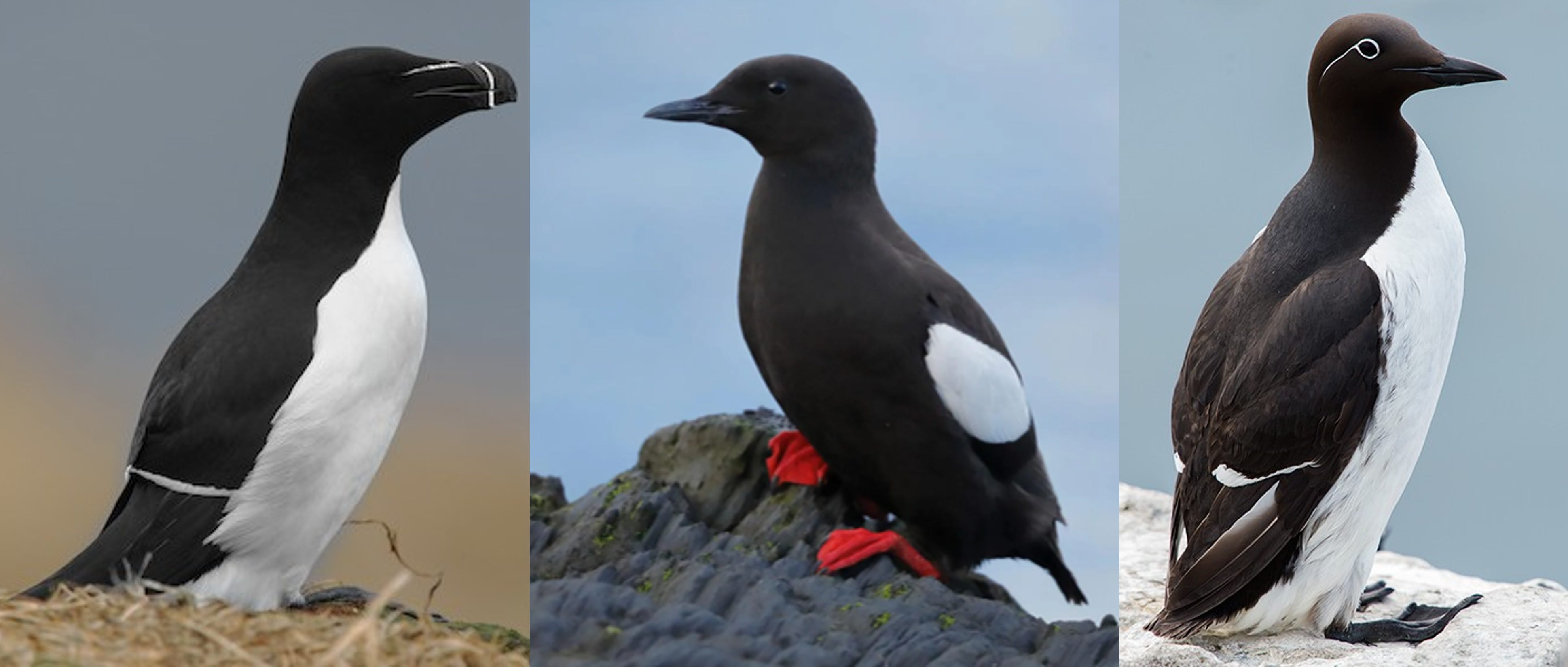
Under now-clear skies, my anticipation built as we enjoyed gulls and terns on a nearshore island before heading farther out to sea. Finally, we approached the wave-pummeled shores of Petit Manan. And suddenly, there they were: three diminutive Atlantic Puffins bobbing on the water, showcasing their dapper, tuxedo-like plumage and multi-hued bills. Riveted, I couldn’t stop smiling. More puffins jostled on shore alongside elegant, penguin-like Common Murres and velvety Black Guillemots with startlingly red feet. I also had my first-ever look at Razorbills, striking seabirds with dark heads and oversized bills inscribed with delicate white stripes.
For a time, I was transported from my terrestrial existence to an alien world of salty air, thrashing waves, and colonial seagoing birds. Our planet’s rich avian diversity provides us with endless opportunities to satisfy our neophilia, but those entrancing little puffins and their dynamic companions reminded me, too, that when we get to know new creatures and places, we become more invested in their wellbeing—and, ultimately, that benefits us all.
Take a small step to help birds
Birds are in crisis and need our help more than ever. According to the US Fish and Wildlife Service, over 96 million people in North America watch birds. If each of us does something (anything!) to help them, we may be able to reverse declining bird numbers.
Please pick up any trash you find while adventuring in wild (or tame) places and dispose of it appropriately. Consuming or becoming entangled in human trash is among the greatest threats to seabirds.
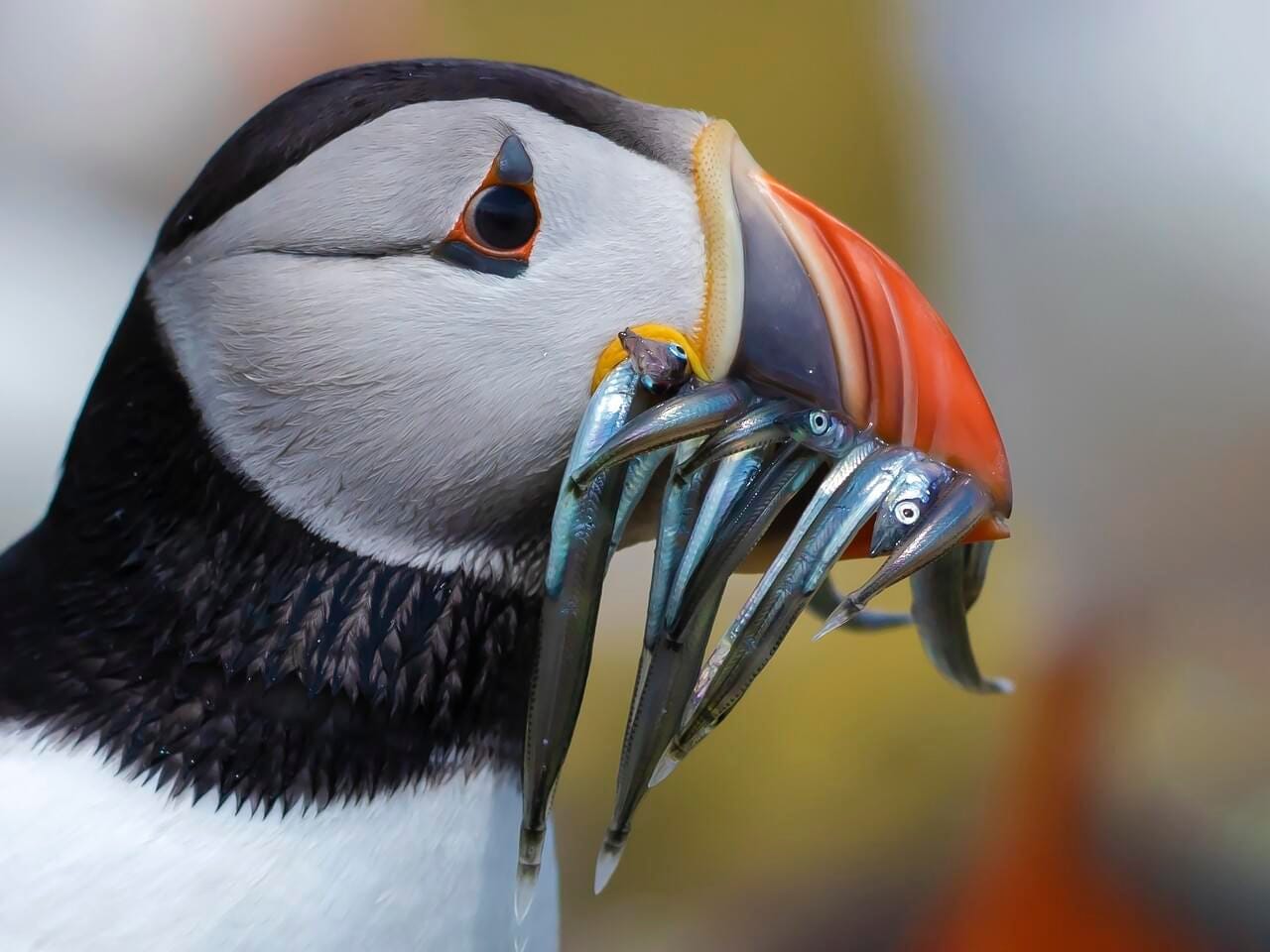
Climate change threatens seabirds of all kinds. In southern Iceland, warming ocean waters have reduced the availability of sand lance—an important prey fish—leading to a near-total breeding failure of Atlantic Puffins for more than a decade. Climate change feels like an overwhelming problem, but as with all threats to birds, doing anything to help is better than doing nothing. You can help the climate by eating less meat, driving less often, using energy-efficient appliances, planting a tree, reducing your plastic use, and voting with the climate in mind.
Observing individual birds often fosters an interest in conserving their species. Webcams offer a remarkable window into birds’ lives, and breeding season is an amazing time to watch them. You can observe Atlantic Puffins loafing on Seal Island in Maine, watch a puffling (yes, that’s really what baby Atlantic Puffins are called!) in its burrow, or watch a Black Guillemot nest, among many options worldwide.
Until next time …
P.S. For those who can’t travel, books provide a great way to experience new creatures and places. Get to know some unfamiliar birds in my book Feather Trails—A Journey of Discovery Among Endangered Birds. (Get 35% off with code CGP35 at checkout.) If you’ve read the book, please consider rating it on Goodreads or Amazon.
Huge thanks to those who have supported my writing and bird-conservation work by buying me coffee!
Oh, yay! PUFFINS! What a great lifer! Each new bird I see makes me so happy, and whets my quest for the next! That search takes me by the hand and leads me to all kinds of new places, cultures, and adventures. Birds are great ambassadors for our natural world. And our standby more often seen species greatly enrich our lives as well, whether by familiar songs or new behaviors, bringing to mind the old tune "Make new friends, but keep the old...one is sliver and the other gold"! Great post, Sophie!! I'm so glad you saw puffins!
What a wonderful seabird celebration you write so well about ! I just love tuning into your posts about the birds and travels you bring so close to my heart! Thank you!